
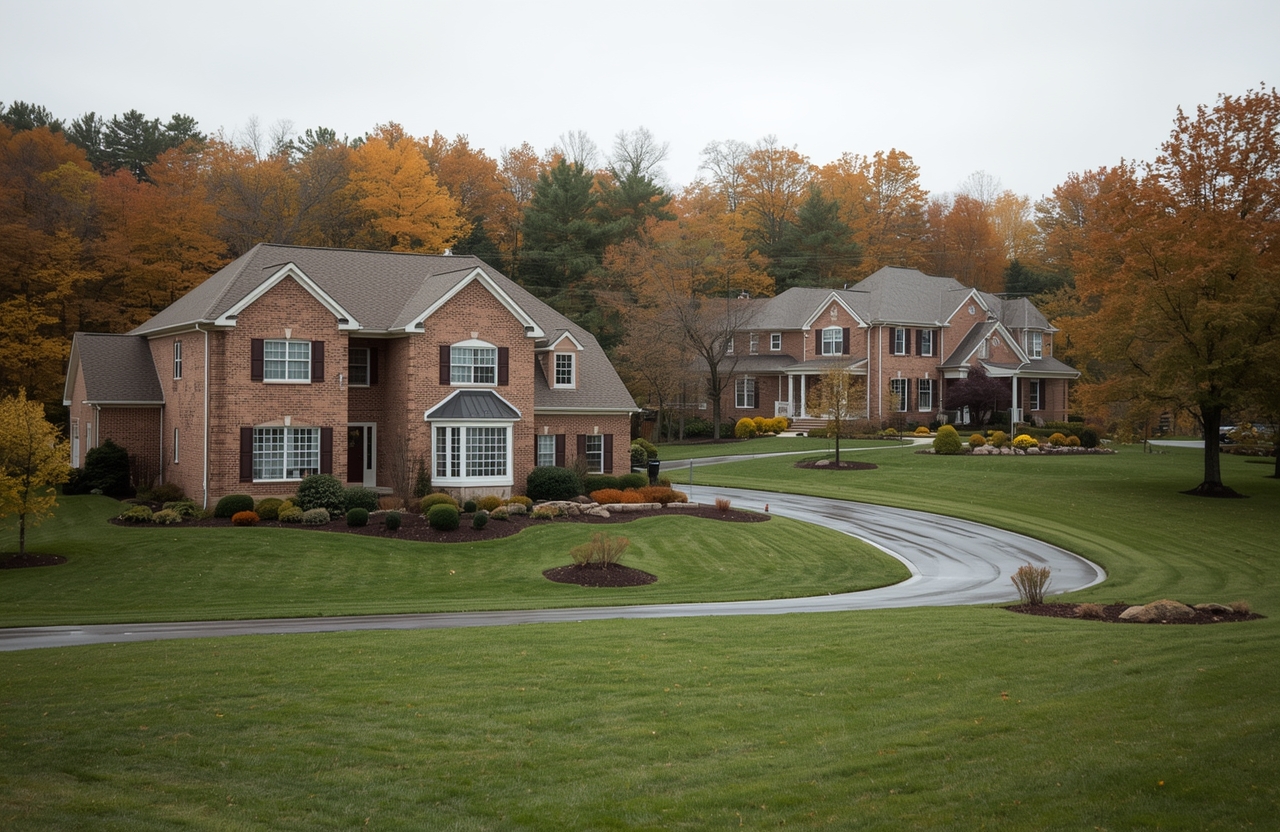
Upper St. Clair is in the South Hills and has a different housing profile from its neighbors. Most houses are from the 1970s through the 1990s, larger than the postwar ranches nearby, on lots that follow the hills, with finished space on several levels. These houses are built tight, insulated and heavily finished. That is good for energy bills and it changes how mold develops: moisture that gets in has little chance to dry, and it can sit behind attractive finishes for a long time.
Why newer, bigger houses hide the problem
An older cellar shows its dampness. A finished lower level does not. Drywall, trim, carpet and cabinetry cover the foundation wall and the slab, and the first sign may be a smell, a warped baseboard or a spot on the carpet edge. By then the growth may already be behind a wall. A careful look uses a moisture meter and, if needed, a small access hole. The mold inspection and testing page explains how this works.
Where it tends to start
Finished walkout and lower levels. Houses on hillside lots often have a walkout lower level with a door to the yard. The back wall is below grade, the floor is a slab, and the finished room is a family room, a gym or a guest suite. Water through the wall, slab moisture and condensation on a cool floor each produce mold behind a finish.
Windows, doors and exterior wall details. Houses built in the 1980s and 1990s used a range of siding and trim details. Sealant that has aged, flashing that was installed poorly or a window with a failed seal lets water into the wall below it. Look for soft trim, stained drywall below a window, bubbling paint and a musty smell in one room. Many such leaks are slow and hidden.
Humidity from inside. Tightly built houses hold the moisture that people make, from showers, cooking and drying clothes. Whole-house humidifiers, which some owners run in winter, can raise indoor humidity enough to cause condensation on cold windows and in cold corners. The EPA suggests keeping indoor humidity under 60 percent, and a lower reading, in the range of 30 to 50 percent, is a good target.
Bathrooms and fans. Large primary bathrooms with big tubs and showers need properly sized fans vented outdoors. A fan that is undersized or ducted into an attic leaves the room damp and the attic wet.
Roofs with multiple pitches and valleys. Complex rooflines have many places for water to enter, such as valleys, dormers and skylights. A stain on an upper-level ceiling after heavy rain often traces to one of them.
Irrigation and landscaping. Sprinkler heads that spray the foundation and beds that slope toward the house add water exactly where you do not want it.
Slopes and drainage
On a hillside lot, water runs across and downhill. Make sure gutters and downspouts discharge well away from the house, preferably on the downhill side, that the soil slopes away from the foundation and that stairwells, window wells and patio drains work. Check any drain that was installed during construction, and test your sump pump if you have one. If water is entering a finished lower level, a drainage contractor can propose interior or exterior solutions. That work is separate from mold removal and worth more than one opinion.
What a good response looks like
In a house like this, removal is usually a targeted job: find the moisture, open the affected wall or ceiling section, remove what has growth, clean and dry the framing, then rebuild. A careful company limits the damage to what is needed and protects the finished areas around it. The steps are described on the mold removal page, and the specifics for lower levels are on the basement mold removal page. For a leak that is still active, drying comes first, as described on the water damage restoration page.
Questions to ask before you hire
- How will the company protect finished floors, furniture and the rest of the house during the work?
- What is the moisture source, and who repairs it? A mold company that does not fix a leak can recommend the right trade.
- Will the opening be limited to the affected area, and who patches and paints?
- Is there a clearance check, and who does it?
- What is the company's home improvement registration number, which applies to residential work over $500 in Pennsylvania? There is no state mold license, so credentials you can verify are the next best signal.
Buying or selling
A buyer in a house of this type should have the lower level and the exterior wall details looked at by someone who reads moisture, not just by a general inspection. A seller who has had water and fixed it can help buyers by keeping records of what was found, what was done and who did it. The guide on mold when you buy or sell a house covers the paperwork and the timeline.
Nearby
Bethel Park has more modest postwar houses on similar slopes, and Mt. Lebanon has the older, denser housing of the streetcar era.