
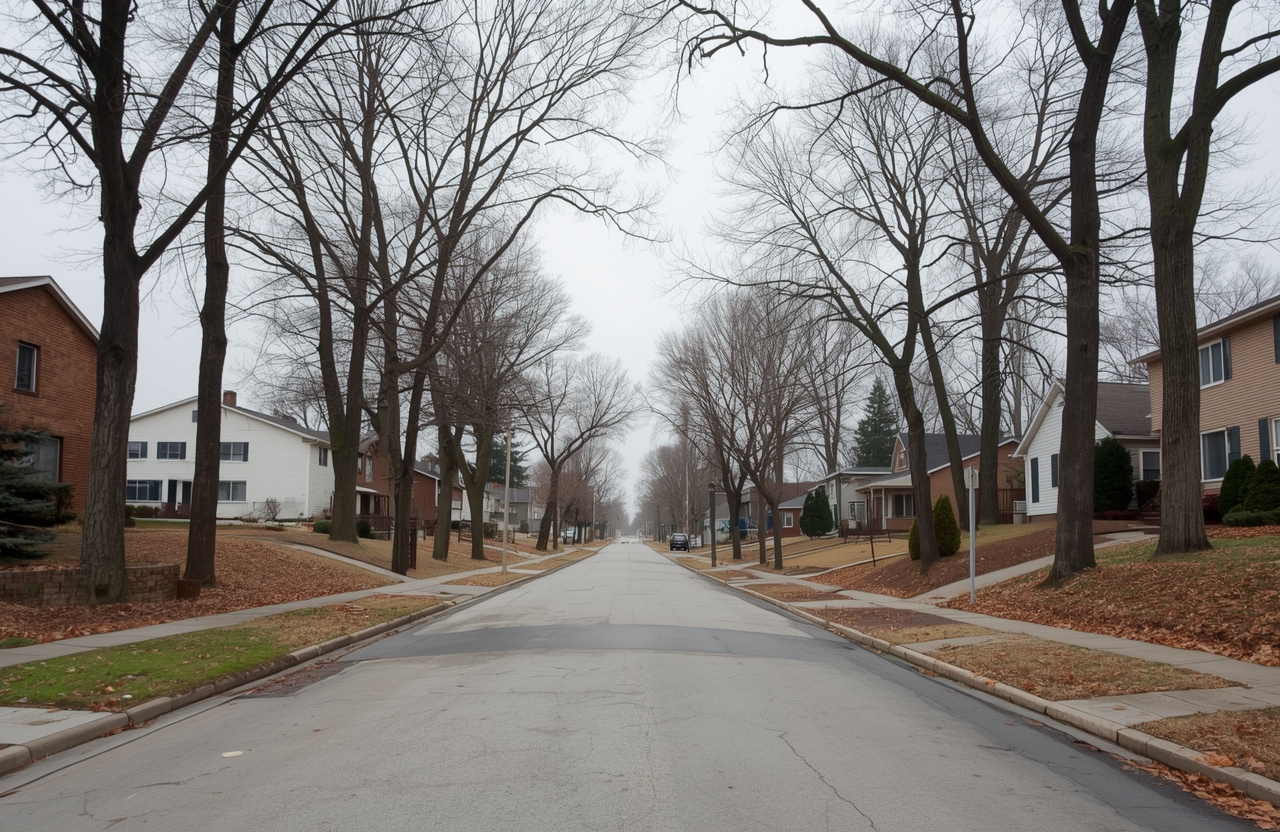
Ross Township lies just north of Pittsburgh, and the McKnight Road corridor runs through its middle. Near the city line, you find houses that were built in the decades before and just after the war, closer together and older in their bones. Further out, postwar ranches and split-levels fill streets that climb the ridges. Newer subdivisions and townhouse communities, mostly from the 1980s onward, make up a third group. A specialist reading a Ross Township house starts by working out which of the three it is.
If the house is older, near the city line
These houses behave like Pittsburgh houses: masonry or block foundations, plaster walls, steep roofs with small attics and a basement that holds the furnace and the laundry. Moisture shows up at the foundation, in the plaster along exterior walls and in attics where bath fans were never connected. The guide on basement mold in older Pittsburgh homes describes the stone and brick details, and the attic mold removal page covers the roof side.
If it is a postwar ranch or split-level
Postwar houses here have block basements and often a finished lower level. The common sources are window wells, gutters and grading, the joint where the floor meets the wall, and old plumbing. Hillside streets add uphill runoff that finds the foundation wall on one side. After a heavy rain the low corner of a basement is the first place that shows water.
If it is a townhouse or newer home
Newer housing is more tightly built and holds humidity inside. Common trouble spots are:
- Finished lower levels over a slab. Carpet and drywall on a concrete floor with no gap hold moisture. A lower level that stays cool in summer can sweat.
- Windows and doors. Flashing and sealant failures let water into the wall below a window, which then grows mold inside the cavity where no one sees it.
- Bath and laundry exhaust. Fans that are undersized or run to the attic put moisture in the wrong place.
- Shared walls and ceilings. In townhouses, a leak next door can come through the wall. Check the declaration or bylaws of the association about who repairs what, notify the association or manager in writing and photograph everything.
- Decks and walkout doors. Water that pools against a threshold seeps into a finished lower level.
A newer house is less likely to have plaster or lead paint, but it is not immune to hidden water. The mold inspection page explains how moisture meters and cameras find water behind a wall without opening much of it.
Running a business or renting out space
Ross Township has retail, office and apartment buildings alongside its houses. For a rental or a small commercial unit, the practical steps are the same: write down what you see, find the water source, ask for a written scope and keep records. For a tenant in either case, write to the landlord and keep a copy. For a landlord, a prompt fix and an inspection report are more useful than an argument about whose fault it is.
What the crew should do on the day
A proper mold job in a Ross Township house follows the steps on the mold removal page: find and stop the water, seal the work area, filter the air, remove what cannot be saved, clean what can, dry and check. Look for these in the quote:
- A named moisture source and who repairs it.
- A written scope with the square footage and the materials listed.
- A plan for sealing the work area from the rest of the house, including the heating and cooling system.
- A final check, with a clearance test on larger jobs by someone independent.
Pennsylvania has no state license for mold work, so ask about credentials you can verify, and for residential work over $500 ask for the home improvement registration number from the Pennsylvania Attorney General.
Insurance
Mold coverage depends on the cause. Many homeowner policies cover mold that follows a sudden covered event, such as a burst pipe, and exclude it when it comes from long-term seepage or humidity. Read your policy or ask your agent before the work begins, and document the damage with photos.
Nearby
McCandless is the adjacent North Hills township, with larger lots and wooded streets. Penn Hills is the comparable postwar suburb on the east side.