
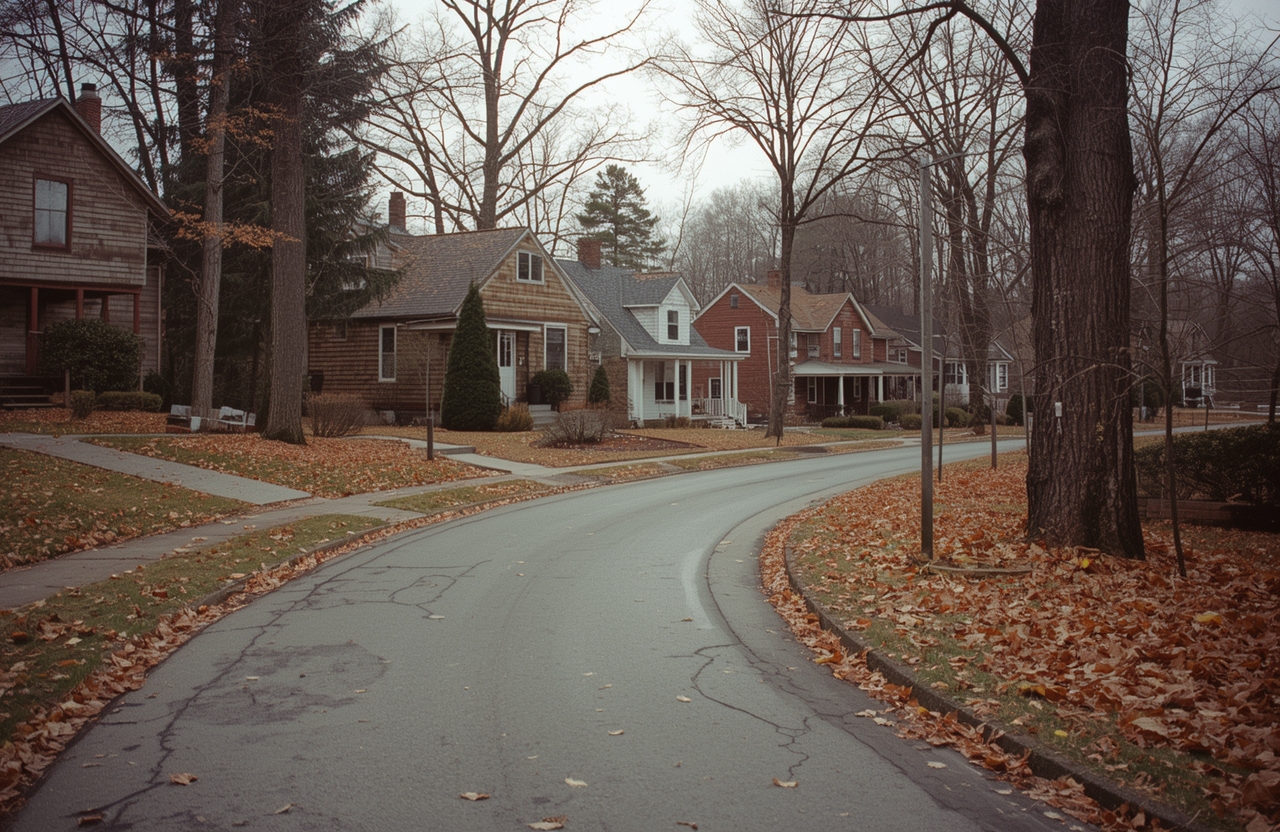
McCandless sits in the North Hills near the edge of North Park, with wooded streets, winding roads and houses spread out on larger lots. Its housing was built mostly in the 1960s through the 1990s, with newer infill in places. Compared with the dense older neighborhoods closer to the city, the trouble here comes less from age and more from shade, tight construction and the way a house sits on a wooded slope.
Trees, shade and a damp exterior
A house under tall trees stays damp longer. Roof shingles under heavy shade hold moss and leaf litter, gutters fill with leaves and overflow at the corners, and north-facing walls and trim stay wet. Overflowing gutters send water down the wall and into the ground beside the foundation. A few habits help:
- Clean gutters in late fall and again after the leaves finish, and install guards if leaves are a constant problem.
- Keep branches off the roof and away from the siding so surfaces can dry.
- Keep soil and mulch several inches below the siding and away from the wall.
- Rake leaf litter and plant material away from the foundation and window wells.
Walkout lower levels
Many houses here have a lower level that walks out to the back yard, with a wall of windows or a sliding door and a finished room behind it. These rooms feel like part of the house, but the back wall is partly below grade and the floor is a slab. Common problems:
- Moisture through the wall and slab that never shows because carpet and drywall cover it.
- Door and window leaks at the threshold where water pools on the patio.
- Condensation on a cool slab in humid summer weather.
- Plumbing for a bathroom or bar that was added later and leaks slowly.
A musty smell in a walkout room with no visible mold is a reason to check readings on the lower wall, the carpet edge and the bottom of the door frame. The page on basement mold removal describes how this is done.
Vaulted ceilings and bath fans
Houses from the 1970s through the 1990s often have vaulted or cathedral ceilings and bathrooms in the middle of the house. A cathedral ceiling has little room for ventilation or insulation, and warm air that leaks into the roof structure condenses on the cold underside. A bath fan that vents into an attic space or into the soffit, where the air is pulled back in, adds moisture. Mold appears as dark spots on ceiling drywall near a bathroom or at the peak. The attic mold removal page covers fan ducts and ventilation.
Crawl spaces and additions
Additions, sunrooms and garage conversions are often built over a crawl space or a shallow slab. Uninsulated, unvented crawl spaces with bare soil raise humidity under the floor, and the floor above feels cold and musty. If a room that was added later smells differently from the rest of the house, check what is under it.
Creeks, runoff and the low spots
The land in the area drains toward its small streams and the Pine Creek valley. Houses near the bottom of a slope, or near a drainage channel, may see higher groundwater after long rains, and lots that receive runoff from upslope neighbors can take more water than the lot below. Walk the property in heavy rain, if it is safe, and see where the water goes. Fixing the drainage can be more effective than any interior treatment.
A sensible way to approach it
- Look at the outside first. Gutters, downspouts, grading, shaded walls and the windows.
- Read the inside with a meter, not just by smell: the lower walls, the slab edge, the ceiling near fans and the window sills.
- Decide what a test would answer. The mold inspection and testing page explains when a sample helps and when it does not.
- Fix the water, then remove or clean. The steps are on the mold removal page.
Hiring in Pennsylvania
There is no state license for mold inspection or remediation. Ask for credentials you can verify, a written scope and contract with a price and, for residential work over $500, the home improvement registration number from the Pennsylvania Attorney General. If the house was built before 1978, ask about lead-safe practices when painted surfaces will be disturbed.
Nearby
Ross Township is the next township south, and Upper St. Clair has comparable larger homes on the other side of the river.