
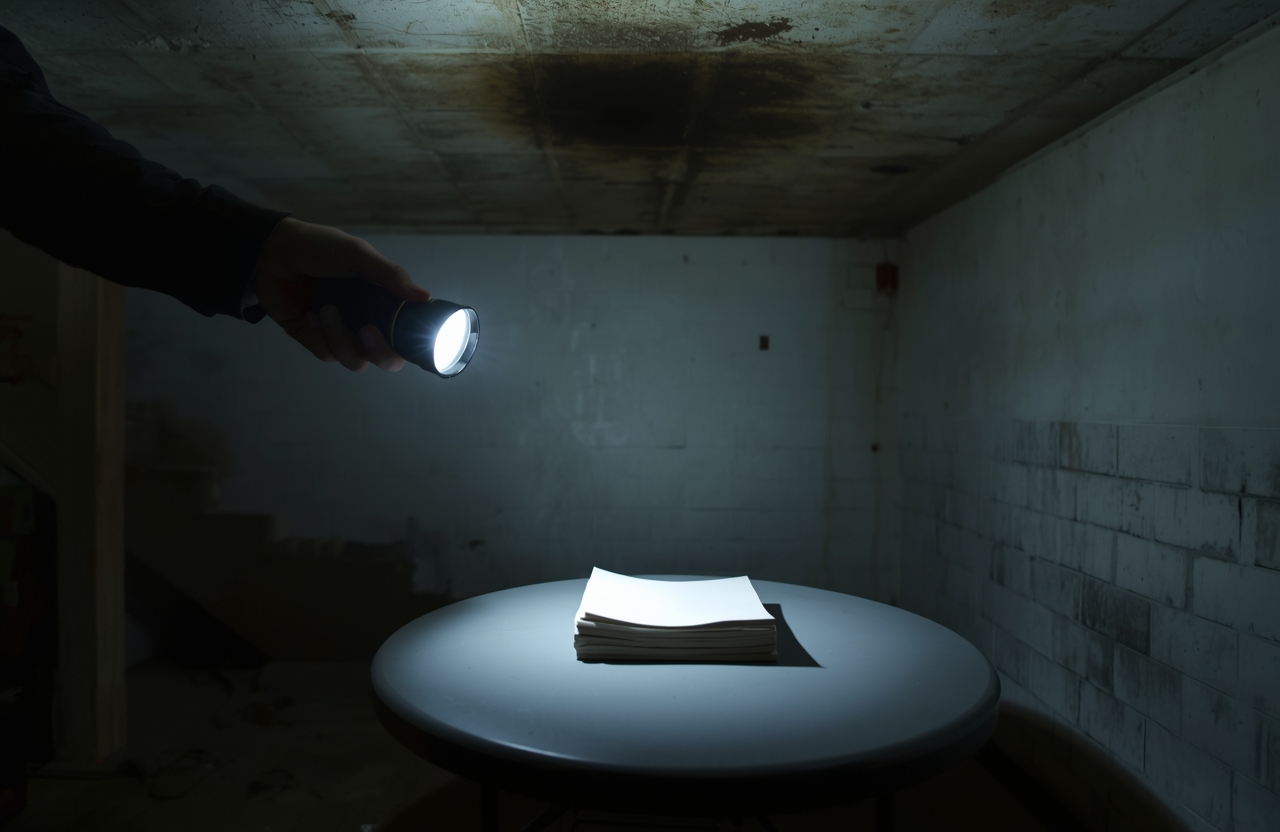
Many houses in and around Pittsburgh are old enough that a damp basement is something the previous owners learned to live with. In a sale, that history becomes a question: how serious is it, who pays and does it change the price? This guide is a plain walk through the usual steps, from the buyer's side and the seller's side. It gives general information about how a sale typically goes. It is not legal advice, and the terms of your own agreement of sale control.
For what a mold inspection includes, see mold inspection and testing. For the steps of removal, see mold removal.
For buyers
What a standard home inspection does and does not cover
A general home inspection is a visual review of the major systems. The inspector reports visible signs of water entry, such as stains, efflorescence, a musty smell and damp readings, and may flag that a mold inspection is worth ordering. Most general inspections do not include mold testing, and they do not open walls. If the inspector sees staining in a basement or attic, treat it as the start of a question, not the answer.
Add a mold inspection when you see these
- A musty smell in the basement, a finished lower level or the attic.
- Fresh paint on one wall, new paneling or flooring in a lower level, or a dehumidifier running in a corner of a house that is otherwise tidy.
- Dark spots or staining on roof wood, ceilings or the lower part of basement walls.
- Evidence of a past flood or leak, such as a water line on the wall, replaced drywall or a sump pump with a new battery backup.
- A house that has been vacant, or a seller who is vague about water.
A mold inspection looks at moisture, not just mold, and the report tells you where the water comes from. That is the real value, since mold can be removed but a seeping foundation or a leaking roof is the larger cost.
Mind the clock
The agreement of sale sets deadlines for inspections and for responses to what they find. Read the dates in your agreement as soon as you sign, and book the inspector before you need the report. If you need a specialist to come and look, start before the deadline, since schedules fill up. If the contingency period is short, ask your agent about the options and whether an extension is possible.
Ask the seller, and read the disclosure
Pennsylvania's real estate seller disclosure law requires sellers to disclose known material defects, and the standard disclosure form asks about things such as water infiltration, drainage and structural problems. Read the form with care. Ask questions the form does not answer, such as when water last came in, what was done and who did it. Ask for receipts and any reports. It is also reasonable to ask whether insurance claims for water were filed, and many buyers ask to see the claims history.
Weighing the findings
When an inspection finds moisture or mold, three questions come first:
- What is the cause, and is it fixed? A leaking roof flashing is a small fix. A seeping stone foundation on a steep lot can be a continuing cost.
- How big is the affected area, and what comes out? A patch of surface mold on framing is one thing, finished walls with mold behind them are another.
- What does a repair actually cost? Ask for written quotes from more than one company before the deadline. General ranges are only a guide: small jobs can be a few hundred to a couple of thousand dollars, and basements and attics with demolition and rebuild can reach several thousand or more.
Your options
Usually you can ask the seller to fix the problem before closing, to give a credit or reduce the price, to extend the time to get quotes or, if the contract allows, to end the agreement. The right choice depends on the cost, on whether the cause is fixed and on how much you want the house. Do not close on a house with an unresolved moisture source and an assumption that it will go away.
Financing and insurance
Some loan programs require that visible damage, including moisture damage, be repaired before closing. Ask your lender. Insurers may also ask about prior water damage and claims, so keep the inspection report.
For sellers
Know what you know
A seller must disclose known material defects, and that includes known water and mold problems. Hiding a known problem, or painting over a stain to hide it, is the worst move, and it can lead to a dispute after closing. If you have had water in the basement, say when, what the cause was and what you did about it.
Consider a pre-listing inspection
For an older house with a damp history, an inspection before you list lets you find out what a buyer will find, fix the cause and document the repair, and avoids a surprise during the buyer's deadline. A specialist's written findings and a record of the repair are more convincing than a verbal assurance.
Fix the cause, then the finish
A fresh coat of paint on a wall that is still wet is a cosmetic fix that a buyer's inspector will notice. If there has been mold, a proper job fixes the moisture, removes what has growth, dries and checks, and gives you paperwork, such as photos, invoices and, on larger jobs, a clearance result from someone independent. Keep it all in a folder for buyers.
Be careful with timing and the paperwork
Some Allegheny County municipalities require an inspection or certificate when a house is sold, with their own rules and deadlines for repairs. Ask your municipality's code office what applies, and ask your agent how a moisture or mold item would be handled. The rules differ from one community to the next.
For agents and for people helping a friend
- Encourage the mold inspection as an addition to the general inspection when the signs are there.
- Schedule early. A short contingency period and a full specialist calendar do not mix.
- Keep conversations about cost factual and in writing.
- Remember that a specialist's job is to describe what is found. Deciding whether a house is worth buying belongs to the buyer.
A few Pittsburgh-specific notes
Stone and brick cellars. Damp is common and not always a deal breaker, but ask what keeps it under control: a sump pump, a dehumidifier, drainage. See basement mold in older Pittsburgh homes.
Hillside lots. Look at the grade and the gutters, and ask where the water goes. The uphill wall is the one to check.
Attics. In an older house, an attic with stained board sheathing and bath fans that vent into the space is common and fixable. See attic mold removal.
Older houses. A house built before 1978 may have lead paint, and older pipe wrap, floor tile and plaster may have asbestos. They matter when remediation involves demolition. In Allegheny County, the Allegheny County Health Department enforces air quality rules for asbestos in renovation and demolition.
Renovated lower levels. A finished basement in an older house can look fine and hide a problem. Ask for moisture readings.
A short timeline
- Before you make an offer, look and smell, and ask about water.
- After you sign, read the contingency dates and book the inspections at once.
- When the report comes in, ask for specialist quotes before the deadline.
- Decide with your agent whether to ask for repairs, a credit or more time.
- After repairs, ask for the paperwork, and for larger work a clearance result.
- After closing, keep the records, and keep the basement dry.