
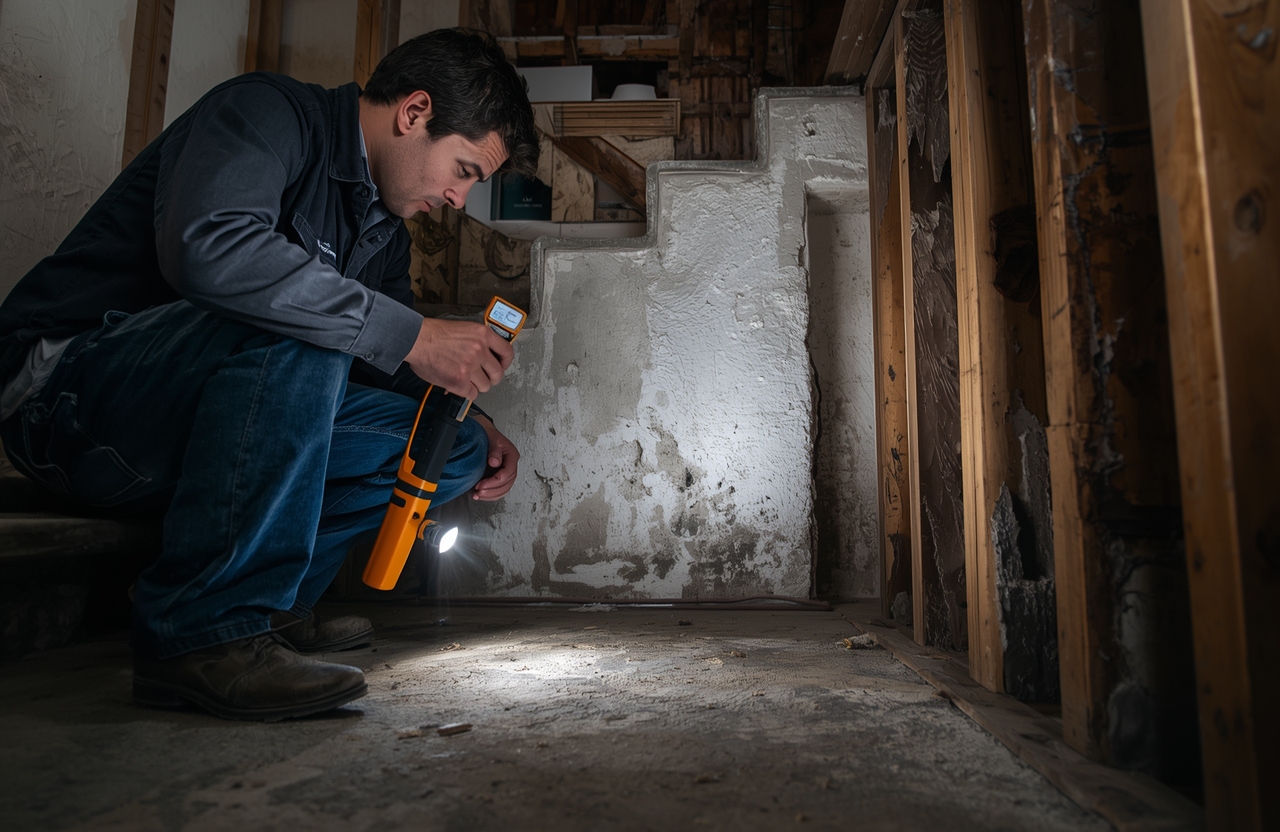
A mold inspection is a careful look at a building for moisture, damage and mold growth, usually with a few instruments. Mold testing is the sampling part: air, surface or material samples sent to a lab. The two get lumped together, and that is how people end up paying for a lab report when what they needed was someone to find the leak. This page explains what each one is, what they can and cannot tell you, when a test earns its cost, and how to read the result, with notes on the older houses common in Pittsburgh and its suburbs.
If you already know you have mold and want it gone, go to mold removal. If you are buying or selling a house, the guide on mold when you buy or sell a house covers the timing.
What an inspection actually is
The core of an inspection is not a test. It is a systematic look at the places mold hides and the conditions that let it grow. A thorough one includes:
- A visual walk-through of the basement, attic, bathrooms, kitchen, laundry, exterior walls and any room with a smell or stain. The inspector looks at the stains, the paint, the baseboards and the corners, and asks about the history of the house.
- Moisture readings. A pin or pinless moisture meter reads how wet drywall, wood and masonry are. A damp reading in a wall with no visible stain is the clue that gets the inspector to the real problem.
- Thermal imaging. An infrared camera shows temperature differences that can point to wet insulation, missing insulation or a cold spot where condensation forms. It is a pointer, not proof of mold, and it should be followed by a meter reading.
- Humidity readings. A basement that sits above about 60 percent relative humidity for weeks is set up for mold even with no leak.
- A borescope or small access holes. Some inspectors look inside a wall cavity through a small hole instead of opening a large one.
- Photos and notes tied to rooms and locations so you can use them later.
The output should be a written report that names the moisture source, the affected areas, the materials involved and what the next step is. It should say plainly when it found nothing.
What a mold test can and cannot tell you
A test samples something and reports what the lab found in that sample. That is useful, and also narrower than people assume.
Air samples. A small pump pulls a measured amount of air across a sticky slide or cassette, called a spore trap. The lab counts the spores by type. The result is a snapshot of a short window of time, and it moves with weather, open windows and whether someone just vacuumed. It is read by comparison: an indoor sample against an outdoor sample taken at the same time, plus samples from several rooms. A number alone means little.
Surface samples. A strip of clear tape or a swab is pressed on a stain and sent to a lab to confirm whether it is mold and what kind. This is the quick way to answer whether a dark spot is mold or dirt, though visible growth rarely needs the confirmation.
Bulk samples. A piece of material, such as a bit of drywall, goes to the lab. This tells you about that piece.
What no test does. There is no accepted health-based safe or unsafe level of mold spores in a home, and no federal limit. A lab cannot tell you that your family is at risk or that a house is safe. It can tell you what was in the sample. Anyone who claims a number proves a health danger is overstating what the science supports.
Home test kits. The petri dish kits sold in stores collect whatever settles from ordinary air, and mold spores are in all air. They grow something almost every time and tell you very little. They are not a substitute for an inspection.
When testing is worth paying for
The EPA's position for homes is that if you can see mold, sampling is usually unnecessary, because you already know. The test earns its cost in a handful of situations:
- A smell without a source. You smell mold, nothing shows, and an inspection has not found it. Air sampling plus hidden-space checks can show whether growth is likely somewhere.
- Documentation for a sale, a dispute or a claim. A landlord and tenant disagreeing, a buyer asking for evidence, or an insurance adjuster asking for a report are all reasons for a written, lab-backed record.
- Health questions that a doctor has raised. Medical advice belongs to a doctor, and the test does not diagnose anything, but sometimes the household wants to know what is in the air of a particular room.
- Clearance after removal. After a larger job, a test shows whether the cleaned area is comparable to a normal indoor space. More on this below.
- Uncertain material. A suspicious stain on something like fiberglass duct or insulation where you cannot tell mold from other discoloration.
A test is a poor use of money when mold is plainly visible on a basement wall and you are simply going to fix the water and remove it. In that case, put the money into the repair.
Why the inspector should not also do the removal
There is a built-in conflict of interest when one company finds the problem and also sells the fix. The company that sells removal has a reason to find a lot to remove. The cleanest arrangement is an independent inspector who writes the scope and checks the work, and a separate remover who carries it out. That is easier for a large or contentious job than for a small one, where having the same person look and fix is a practical choice.
If the same company does both, you can protect yourself by asking for the inspection findings in writing before you see a price, by asking what they would do differently if the test had come back clean, and by getting a second opinion on anything large. Clearance by someone independent is the best check on a big job.
How the lab is chosen
Ask which lab analyzes the samples and whether it is accredited for microbiology. The American Industrial Hygiene Association runs a recognized program, called EMLAP, for environmental microbiology labs. Accreditation does not guarantee a conclusion, but it means the lab follows an audited method. The report should list the sample locations, the volume of air drawn, the spore types and counts, and the outdoor comparison.
Reading the report
A typical air report lists spore types and counts per cubic meter. These pieces matter more than any single number:
- Indoor against outdoor. Spore types indoors should look roughly like those outdoors. A type that is high indoors and nearly absent outdoors points to an indoor source.
- Water-loving types. Some molds, such as Stachybotrys and some Chaetomium, tend to show up where materials have been wet for a while. Finding them suggests long-term water, but the species alone does not mean danger, and the CDC does not recommend identifying species in a home as a basis for cleanup decisions.
- Several locations. One room high and the rest normal tells you where to look.
- Weather. A test done the morning after a heavy rain with windows open is not comparable to one done in a closed house on a still day.
A report that says "elevated" with no comparison, no outdoor sample and no moisture findings is a weak report.
Older Pittsburgh houses: what inspectors look for
The local housing stock changes the checklist. In the city and the older suburbs, a few places are worth a close look.
Stone and brick foundations. Rubble stone and old brick walls are porous and often damp at the bottom. White mineral crust on the wall is a sign that water is moving through. The question is where it enters and what stands next to the wall: stored boxes, wood paneling, a finished room built tight against it.
Basement floor drains and old sewer connections. Floor drains with dry traps let sewer air into a basement, and drains can back up in heavy rain. Both leave odors that people mistake for mold.
Plaster and lath. Water behind plaster can run for a long time before a stain shows. Moisture readings on lower walls near a damp foundation are telling.
Attics. Many older Pittsburgh houses have attics with board sheathing, bath fans that vent into the space and uneven insulation. Winter condensation shows up as dark staining on the underside of the roof. The page on attic mold removal covers it.
Chimneys, flashing and roof valleys. Slow roof leaks soak rafters and ceilings for years before a drip appears.
Windows and wells. Window wells that hold water and old window frames that sweat leave stains on nearby walls.
Steep lots. Many Pittsburgh houses sit on a slope, with soil pressing on one side of the foundation and drainage that has to carry water away from it. The wall on the uphill side is often the wet one.
Preparing for the visit
- Write down where you see or smell something and when it is worst, such as after rain or in summer.
- Note any past leaks, floods, repairs or insurance claims and when they happened.
- Clear access to the basement walls, the attic hatch and under sinks.
- Do not clean the stain before the inspection, and do not spray anything on it. Cleaning removes evidence.
- If air testing is planned, the inspector may ask you to keep windows and exterior doors closed for several hours beforehand, so the test reflects a normal closed-house condition.
What it costs, in general terms
An inspection with moisture readings is commonly a few hundred dollars, and sampling adds a lab fee per sample. A clearance test after removal is often priced separately. Prices vary with house size and the number of samples, and the specialist quotes after hearing about the property. Be cautious about very low prices that include a lot of samples; more samples are not more insight if they are not taken thoughtfully.
After the inspection
The report should lead to one of three outcomes. The first is that nothing needs doing beyond a moisture fix, such as a dehumidifier, a gutter repair or a bath fan vented outdoors. The second is a plan for removal, which should follow the steps on the mold removal page. The third is a plan for a leak or flood that needs drying first, which belongs on the water damage restoration page. A good inspector tells you which of the three you are in and does not push toward the biggest one.