
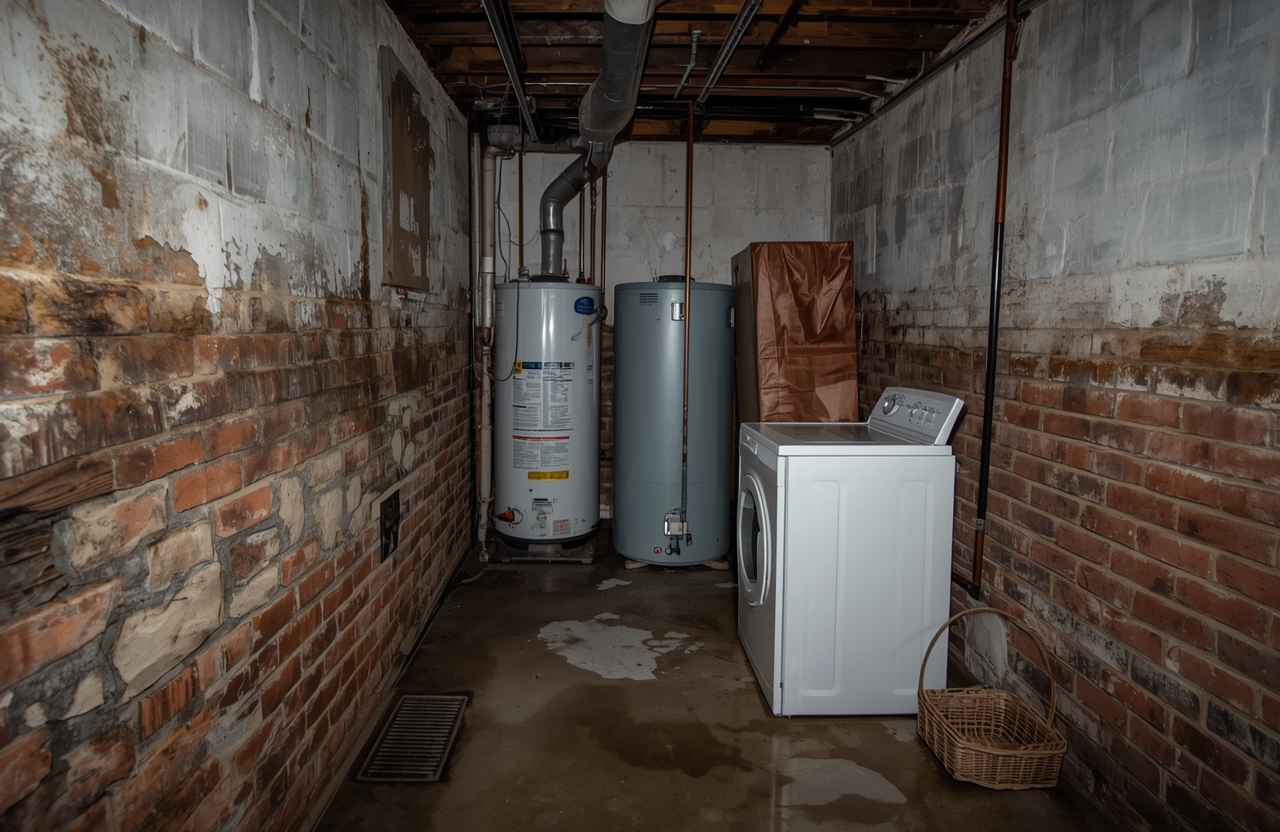
Walk into the basement of a house built before World War II anywhere around Pittsburgh and you are standing in a piece of engineering that made sense for its time. The walls are rubble stone, brick or early block. The floor is poured concrete over earth, or sometimes the earth itself with a thin skim of concrete on top. There is a floor drain, a coal chute that was bricked over long ago, and a furnace that now burns gas. Nobody expected this space to be warm, finished and dry like a living room. They expected it to be cool, a little damp and well ventilated, a place for coal, canning and a laundry tub.
Mold shows up when a house like this gets used in a way it was not designed for. This guide explains how the original cellar handled water, which common upgrades defeat it and what that means when you smell mold. For the practical steps of fixing a damp basement, see basement mold removal, and for what a visit involves, mold inspection and testing.
How an old cellar handled water
The builders of the time used a few simple ideas.
Masonry that could dry. Stone and brick walls bedded in lime-based mortar are porous. They take up moisture from the soil and let it go to the air inside and outside. Because water could move through the wall in both directions, the wall rarely stayed saturated.
A soil edge that drained. Houses often sat on a bed of gravel or on well-drained hillside soil, and a drain at the footing carried water away. Many Pittsburgh lots are sloped, so surface water ran past the house.
Air. Cellars had windows that opened, a coal chute and a furnace that burned air from the room. Air moved, and moving air dries masonry.
Nothing precious against the walls. The cellar walls held shelves and not much else. If something got damp, it dried again.
Where it goes wrong
Nearly every modern change affects at least one of those ideas.
Sealing the wall with paint or coatings. Masonry sealers and paint-on waterproofing stop water from leaving the wall as vapor. On a wall that is wet from the outside, they trap the water behind the film, which then blisters and peels. The mold grows on the back of the film and on whatever sits in front of it.
Hard cement parging and modern mortar. In some old walls, a hard cement skim coat or repointing with strong Portland cement mortar traps moisture in the softer stone and brick behind it. The wall cannot dry through the hard layer, so the moisture shows up at the edges, lower or higher, or the stone face spalls.
Finishing against the wall. A wood stud wall with drywall or paneling set right against a stone wall gives mold a damp, dark, still pocket with food, in the form of paper and wood. Carpet on a slab does the same on the floor. The surface can look perfect for years while the hidden side grows mold.
Closing the windows and the chute. Sealing a cellar for energy efficiency or for radon, and bricking over the old openings, cuts the ventilation that dried it. Without a dehumidifier, humidity climbs in summer.
Changing the grade and the gutters. A new patio that slopes toward the house, a downspout tied into a buried drain that failed, or a flower bed that holds water can put more water against a wall that used to be fine.
Storing paper and cloth. Boxes of papers, books, clothes and upholstered furniture against a cool masonry wall absorb moisture and grow mold, often before the wall itself shows anything.
Reading the clues in an old cellar
These signs say a lot about what is going on.
- White crust on the wall. Efflorescence is mineral salt left behind when water passes through masonry and evaporates. It means water is moving through. It is not mold, but it points to the cause.
- A damp line a foot or two up the wall. Water wicking up from the floor or from the footing.
- Powdery, crumbling mortar or stone face. Water and freeze-thaw cycles are breaking down the wall.
- Damp on only one wall. The uphill wall, the wall below a downspout or the wall near the street.
- A musty smell that peaks in summer. Humid air condensing on cool walls.
- Dampness after storms only. Groundwater pressure or a failing drain.
- A sewer smell near the drain. A dry trap or a damaged lateral, not mold.
Sorting out the fixes
Because the walls were built to breathe, the best fixes usually leave them able to.
Water outside first. Clean gutters, downspouts that discharge away from the house, soil sloped away and no paved surface directing water to the wall come before anything inside. This reduces the load, often a lot.
Drainage if needed. A real fix for a wall under pressure is a drain at the footing, inside or outside, with a way for the water to leave, such as a sump pit and pump or a gravity outlet on a hillside. That is a job for a waterproofing contractor. It can be expensive, so get more than one opinion and ask how the proposed system fits an old stone or brick wall.
Let the wall dry. Remove paint-on sealers that are failing. Do not coat the wall with an impermeable layer unless there is a drainage system behind it. Keep furniture and boxes off the wall with a gap of a few inches.
Control humidity. A properly sized dehumidifier set to hold 30 to 50 percent, with a hose to a drain or a pump and a hygrometer to check, is often the most useful single item in an old basement in a humid summer. The EPA associates humidity above 60 percent with mold growth.
Finish carefully, if at all. If you want living space down there, build for moisture. Leave an air gap and use materials that tolerate dampness, such as inorganic panels, on exterior walls. Keep wood off masonry. Do not lay carpet on a slab. And know that a finished room in an old cellar will need a dehumidifier, running continuously in humid months, for as long as you use it.
Keep it ventilated. If the cellar still has operable windows, use them in dry weather. If a mechanical system is needed, an energy recovery or exhaust approach designed for the space is better than guesses.
When mold is already there
Mold on a stone or brick wall is cleaned, not removed. A specialist brushes the growth off, HEPA vacuums the surface and then dries it, and the material the mold grew on, such as wood shelves, paneling, drywall and insulation, is removed. The key step is the one before the cleaning: stopping the water. The mold removal page describes containment, air filtration, cleaning and checks.
Old houses and other hazards
Houses built before 1978 may have lead in old paint, including paint on cellar trim, stair parts and furnace room walls. Pipe wrap, furnace insulation, floor tile and some plaster in older homes can contain asbestos. Cutting, sanding or tearing out those materials spreads them. Before demolition in an older cellar, ask whether suspect materials have been checked, and whether the crew follows lead-safe practices. In Allegheny County the Allegheny County Health Department enforces air quality rules for asbestos in renovation and demolition.
Radon deserves a mention, since Pennsylvania has high radon levels in many areas. A radon system does not cause mold, and it is worth testing for radon in an old basement. If a system is installed, remember that sealing the cellar can raise summer humidity, so plan a dehumidifier.
A short checklist
- Walk the outside in the rain and note where water goes.
- Clean the gutters, extend the downspouts and regrade where you can.
- Clear the wall, with boxes and furniture a few inches away.
- Put a hygrometer and a dehumidifier in the room and run it.
- Check the sump pump, the floor drain and the window wells.
- Write down where it is wet and when, and take photos.
- If staining, a strong smell or soft materials persist, ask for an inspection.
Where to go next
If you find mold, the pages on basement mold removal and mold removal lay out the steps. If the basement has flooded, read mold after a basement flood. If you are buying a house with an old cellar, see mold when you buy or sell a house.