
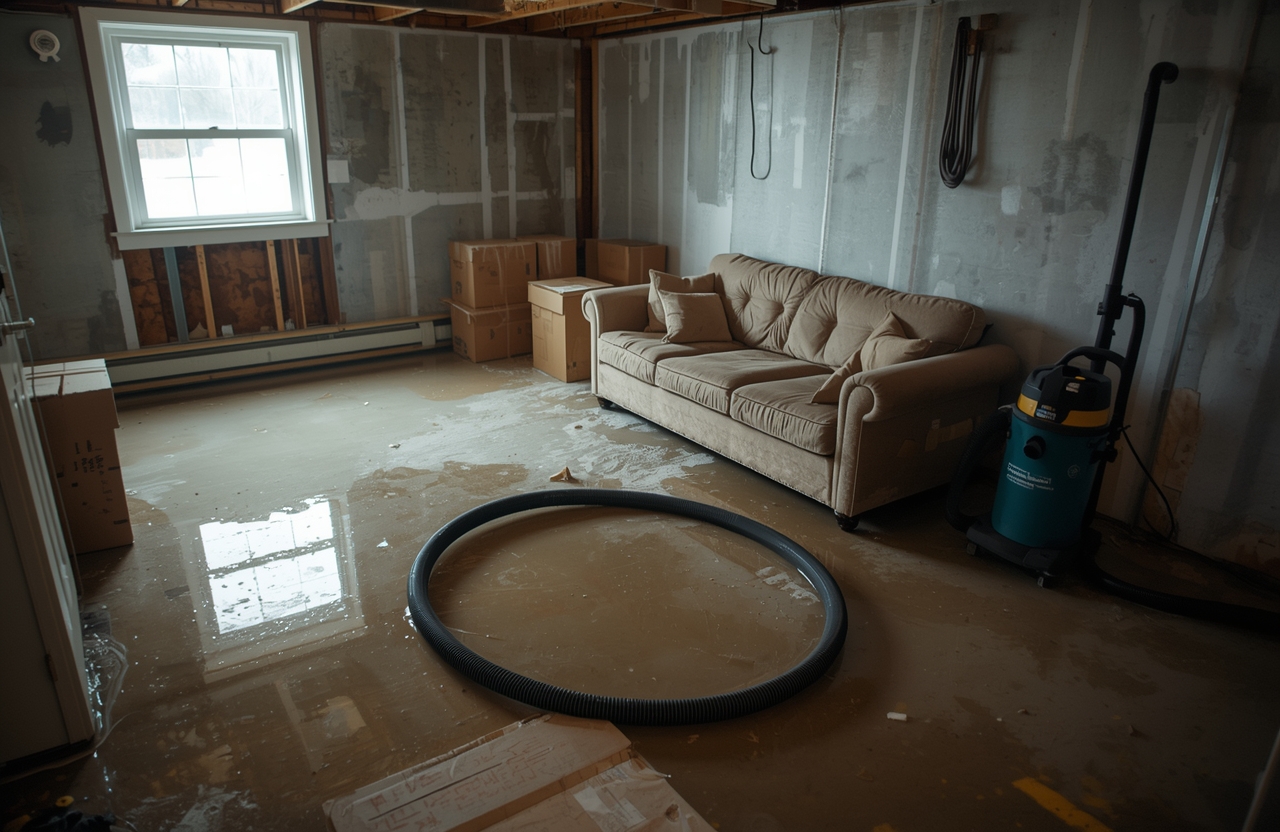
A basement flood in this area usually follows a heavy, soaking rain on hillside ground, a failed sump pump, a backed-up drain or a burst pipe in winter. Whatever the cause, the same clock starts. Mold spores are already in the house, and wet paper, wood, drywall and carpet give them what they need within a day or two. This guide walks through the response in order, from the first hour to the first two weeks, with notes on what is safe to do yourself and what is not. For the longer explanation of drying, see water damage restoration.
Before you do anything: safety
Electricity. If water is up to outlets, the furnace, the water heater, the washer or the electrical panel, do not wade in. Standing water and live power can kill. If you cannot reach the breaker panel without stepping in water, stay out and call the electric utility or an electrician.
Gas and fumes. If you smell gas, leave the house and call the gas company from outside. Never run a gasoline pump or generator inside the house or in an attached garage: the exhaust carries carbon monoxide.
What the water is. Rainwater and groundwater that seeps through the wall carry soil and bacteria. A sewer backup or a toilet overflow is sewage. Water that has been standing for days is also contaminated. Treat anything beyond a clean pipe leak as contaminated: wear waterproof boots and gloves, avoid touching your face and keep children and pets out.
Heavy things. Wet carpet, soaked drywall and full boxes are heavy and slippery. Do not lift more than you can handle.
The first hours
- Stop the source if it is a pipe or a water heater, by shutting off the supply.
- Photograph and film everything before you move it, including the water line on the wall and the contents. Insurance claims rely on this.
- Call your insurer or your agent to report the loss and ask what they require. Ask whether you have water backup coverage or flood coverage, since standard policies often exclude one or both.
- Get the water out, slowly if the ground is saturated. If the soil around the house is soaked, emptying a deep basement all at once can let the pressure outside push on the walls and, in a worst case, damage them. The usual advice from emergency agencies is to lower the water gradually, around a third of the depth per day, when the ground is saturated. If the flood is from a pipe or a small leak, you can pump it all.
- Move what you can to a dry area: papers, photos, electronics, books and clothing. Hard goods go up on blocks or outside.
- Start the fans and the dehumidifier if the power is safe, and open windows when the weather allows.
Day one and two: the critical window
The EPA's guidance on flooded homes is to dry or remove wet materials within 24 to 48 hours to prevent mold. Treat that as the target.
What to throw out right away. Anything porous that was soaked and cannot be dried quickly, especially if the water was contaminated: carpet and pad, upholstered furniture, mattresses, cardboard boxes, paper, particleboard furniture, soaked insulation. The rule public health agencies use is simple: when in doubt, throw it out. Photograph items first, and keep a list of what was discarded and a rough value.
What can be kept and cleaned. Hard goods such as metal, glass, solid wood and plastic can usually be cleaned and dried. Clean with detergent and water, then dry. For contaminated water, the CDC and EPA publish flood cleanup instructions for sanitizing hard surfaces; follow those, and never mix bleach with ammonia or other cleaners.
Drywall and paneling. If the water was clean and shallow and the drywall is dried quickly, it may be salvageable, though many cases need removal. If the water was contaminated, or the drywall stayed wet, it is cut out. The usual practice is to cut a clean line about a foot or two above the water line, which is sometimes called a flood cut. Wet insulation behind it goes too.
Open the cavities. Pulling baseboards and cutting small openings lets wall cavities dry, and a moisture meter shows when they have.
Dry the structure. Dehumidifiers and air movers, running around the clock, dry a structure far faster than open windows. A professional crew can measure the result.
Days three to seven: dry, check, decide
- Keep the equipment running until readings show the materials are dry. A wall that feels dry to the hand can still read wet inside.
- Look for early mold. Fuzzy or speckled spots, a musty smell and dark staining on wood or drywall mean growth has started. It is common after a flood and it is manageable if caught.
- Do not close up wet walls. Re-installing drywall or paneling over a damp cavity is the most common reason a flood becomes a mold problem months later.
- Check the mechanicals. A furnace, water heater or electrical panel that was in water needs a professional to inspect it before it is used.
- Clean the hard surfaces of the floor, the walls and the framing.
Weeks one and two: the final checks
If everything was dried in time, there may be nothing more than a rebuild. If something stayed wet, or the flood was contaminated, or mold appeared, call a specialist. The mold inspection page explains what a visit includes, and the mold removal page describes the steps. A moisture meter reading and a clear plan for what comes out are more useful than a test in most cases, since visible mold does not need a test to confirm it.
When to bring in professionals
- The flood covers more than a small part of the floor.
- The water was sewage or floodwater.
- Walls or insulation are wet.
- You see or smell mold.
- Someone in the home has asthma, allergies, a lung condition or a weakened immune system.
- You are not sure the structure is drying, or the electrical or gas systems got wet.
When you choose a company, Pennsylvania has no state license for mold or water restoration, so ask for verifiable credentials, a written scope and contract, proof of liability insurance and, for residential work over $500, the home improvement registration number from the Pennsylvania Attorney General. Be careful with anyone who pressures you to sign over your insurance benefits or demands a large deposit up front.
Older houses: extra cautions
A house built before 1978 may have lead paint on cellar trim and walls, and asbestos in pipe wrap, furnace insulation and floor tile. Tearing out wet material disturbs them. Ask whether suspect material has been checked before demolition and whether the crew follows lead-safe practices. In Allegheny County, the Allegheny County Health Department enforces air quality rules for asbestos in renovation and demolition.
Preventing the next one
- Test your sump pump now, and consider a battery backup and a water alarm.
- Keep gutters clear and downspouts discharging well away from the foundation.
- Cover and drain window wells.
- Keep stored items on shelves or in plastic bins, off the floor.
- Ask a plumber whether a backwater valve makes sense if your drains have backed up before.
- Keep the humidity between 30 and 50 percent.
The short version
Safety first, then stop the source, document, remove what is soaked, get a dehumidifier and fans running, keep them running until a meter says dry, and only then rebuild. If mold appears anyway, see basement mold removal, and if you are weighing the cleanup cost, the mold removal page explains what a proper job includes.